
My Journey to India: The Heart of Our Colour Powder Production
India has always fascinated me. As the birthplace of the colour powder that fuels festivals, colour runs, events, and celebrations all around the world, it’s a country rich in tradition, culture, craftsmanship, and vibrant energy. Last year, I (Nigel Halliday, Managing Director of Ministry Of Colours) had the privilege of visiting our suppliers to see firsthand how our authentic, top-quality colour powder is made – from locally sourced ingredients to the final product that ends up in the hands of our customers.
Authenticity at the Core
At Ministry of Colours, we believe in bringing our customers the most authentic experience possible. That’s why we source our colour powder directly from India, the home of Holi and colour celebrations. Unlike some other alternatives, our colour powder follows a traditional production process that has been passed down for generations.
The journey starts with locally sourced cornstarch, chosen for its soft, silky texture and natural properties. This starch is then dyed using food-grade colours, ensuring that every handful of powder is not only vibrant but also safe for the skin and the environment. Once dyed, the powder is dried using natural heat and sunlight, or where needed, renewable fuels, making the entire process sustainable and environmentally friendly.
Sustainability and Ethical Sourcing
One of the things that struck me the most during my trip was how deeply committed our suppliers are to sustainability. In a world where industrial production often comes at the cost of environmental damage, I was proud to see how our colour powder is created using eco-conscious methods. The reliance on natural drying techniques (it was very hot there!) reduces energy consumption, and by using non-toxic, biodegradable ingredients, we ensure that our colour powder leaves no harmful impact on the planet.
Making a Difference: Economic and Social Impact
Beyond sustainability, our colour powder production plays a crucial role in supporting local communities. Every bag of powder we sell helps employ over 100 people, from factory workers to logistics teams, helping to provide stable income and opportunities in regions where employment can be scarce.
One of the most inspiring aspects of our supplier’s business is their dedication to gender equality and social responsibility. Their female Sales Director is a testament to the changing dynamics in India’s workforce, and I was truly inspired by her leadership and passion for the industry. On top of this, our manufacturer actively supports Government schemes such as Beti Bachao Beti Padhao, which translates to “Save the Girl, Educate the Girl.” This initiative aims to combat gender bias and improve opportunities and welfare services for young girls, ensuring they have better access to education and a brighter future.
Knowing that our partnership contributes to such meaningful causes makes every festival, race, and event that uses our colour powder even more special.
A Journey of Insight and Appreciation
Walking through the production facilities, meeting the dedicated workers, and witnessing the traditional craftsmanship behind every batch of powder was a great experience. It reaffirmed my belief in our commitment to quality, authenticity, and ethical sourcing.
At Ministry of Colours, we’re not just selling colour powder—we’re sharing a piece of India’s rich culture and supporting a supply chain that empowers communities. We are incredibly proud to be a part of this industry, ensuring that every handful of colour you throw carries with it a story of tradition, sustainability, and positive impact.
Until next time, India—thank you for the colour, the culture, and the inspiration.
Nigel Halliday
Managing Director, Ministry of Colours


My First Holi Festival
POV: A Yorkshireman At Holi
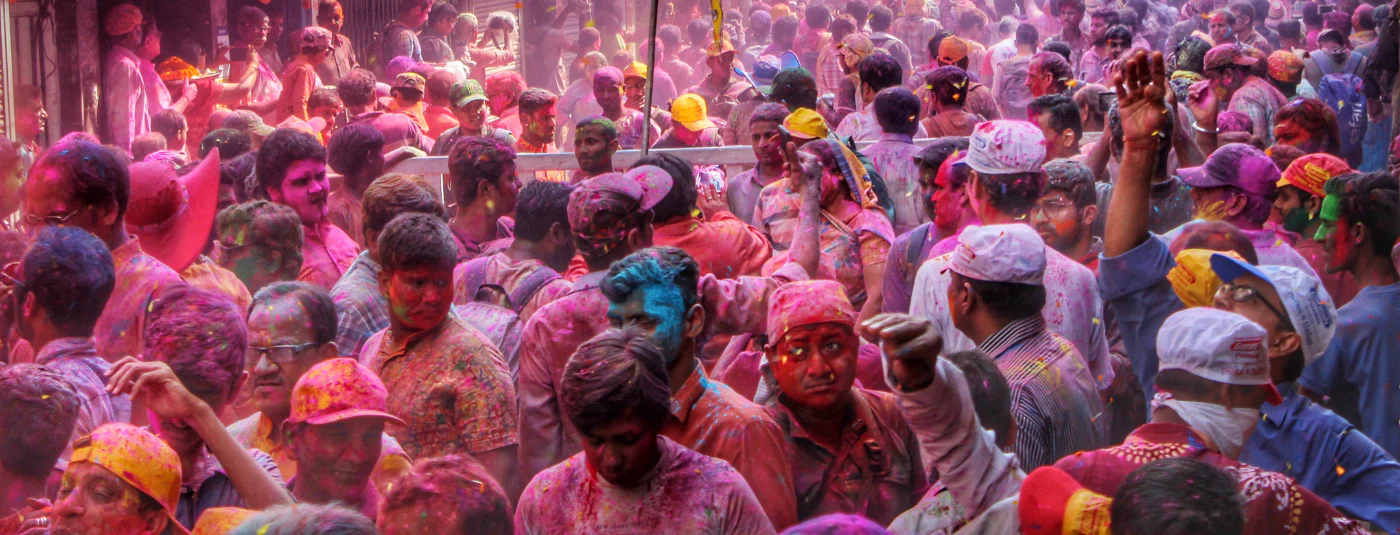
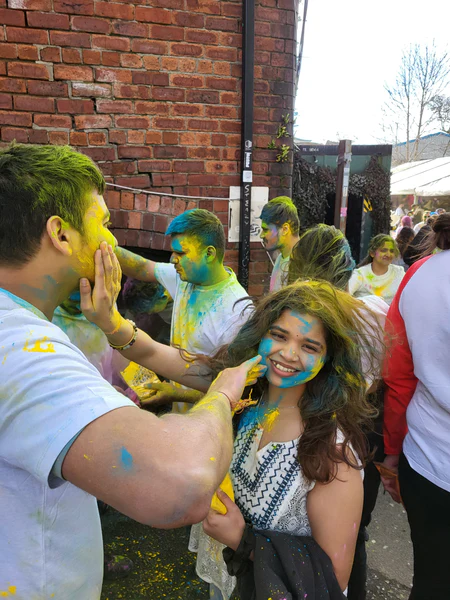
As a relatively uncultured Yorkshireman, I had no idea what to expect when I was stationed to work at the UK’s largest Holi Festival at Beaver Works in Leeds. Now most festivals I have attended in the past have a ‘no mess’ policy, but not this one! At Holi you are encouraged to make as much mess as possible with safe and natural powders that come in 7 vibrant colours. Celebrating my first Holi festival was an exciting and colorful experience filled with joy and tradition. One that will be remembered forever. I soon found out that Holi was more than just a party, it’s a time for friends and family to forget differences and come together in a spirit of unity and love.

Holi, also known as the festival of colors, is a Hindu festival originally celebrated in India but now celebrated all over the world. It marks the arrival of spring and signifies the victory of good over evil in Hindu mythology. During Holi, people come together to play with vibrant colored powders, known as gulal, creating a beautiful kaleidoscope of hues. Each colour at Holi represents something different:
- Red symbolises love and passion and is the most beloved color during Holi.
- Yellow is the sacred colour of India.
- Blue is a symbol of courage, love, calm, and serenity.
- Green holds the essence of energy, new beginnings, harvest, and hope in Hindu culture.
- Pink is a favorite colour for girls and women, and it is seen as the most attractive and energetic color.
- In Hinduism, the colour orange symbolises the sacral chakra, the energy center related to sexuality and self-awareness.
- Purple is always connected to royalty, wealth, and power in India.
Thankfully, I was prewarned to join in the festivities by wearing budget sunglasses to protect my eyes, and old garments that I didn’t mind getting stained with colours. Lucky, I also managed to narrowly avoid wearing the Sequin Rainbow Skirt I was told all first-time Ministry of Colours employees must wear… I did settle with a Leis, however. I instantly saw that Holi is a time to let go of inhibitions and within the first few minutes of opening, I was covered from head to toe in colours. Mostly purple, which must have been a mistake as my attributes don’t tend to signify royalty, wealth and power. I then got to tuck into some traditional sweets like gujiyas and thandai that are also enjoyed during this festive occasion. These delicious treats will certainly be making their way onto my shopping list in the near future.