

Get Spooky with Colour Powder: Creative Ways to Use It for Halloween
When it comes to Halloween, we all want to stand out and have a blast. Instead of sticking to the same old costumes, decorations and party games, why not add a splash of colour to your festivities? Colour powder isn’t just for fun runs or festivals; it can transform your Halloween into a colourful spectacle. Here are some cool ideas to get you started.
Spectacular Halloween Costumes
Why not use colour powder to create unique and eye-catching costumes? Imagine dressing up as a vibrant zombie or a colourful witch. Simply coat your costume with different shades of colour powder to give it a spooky yet playful look. Red colour powder is commonly used for blood, Green colour powder gives a putrid look, Orange colour powder embodies the Halloween spirit (resembling a pumpkin), White colour powder provides a ghostly look, and Black colour powder represents the darkness. Each powder sticks to fabrics easily, so you can let your creativity run wild without worrying too much about mess. Just be prepared for some colourful fun!
Unique Halloween Party Decorations
Planning a Halloween party? Colour powder can take your decorations to the next level. Use it to craft spooky centrepieces, fill jars, or even create funky table runners. You can layer different colours in glass containers to mimic potions brewing in the cauldron.
Spooky Games & Fun Activities for Kids
Kids love hands-on activities, and colour powder can be a blast at any kind of gathering. Create a mini colour party with a safe, supervised throw fest. Let kids toss colour powder at each other while wearing white T-shirts. To them, it’ll feel like magic! It’s a fantastic way to get them laughing and having fun. Consider a scavenger hunt where each find releases a burst of colour into the air. You can also play a spooky version of dodgeball, where players throw colour powder-filled bags instead of balls. It’s the fun twists on classic games that add a festive vibe everyone will remember.
Halloween Crafts with Rangoli
Crafting is another fun way to incorporate colour powder. You can create colourful Halloween-themed art with Rangoli and glue. Just think: spooky ghosts or spooky trees that can come alive with colour! Not only will this keep you busy, but it also lets your inner artist shine.
Wrapping Up the Fun
Colour powder can add that extra pop to your Halloween festivities, transforming the ordinary into extraordinary. Whether you’re dressing up, decorating, or just having fun with friends and family, it opens the door to creativity. So, why not embrace the colourful chaos this Halloween with safe and vibrant colour powders from Ministry Of Colours? Your celebration will be unforgettable!

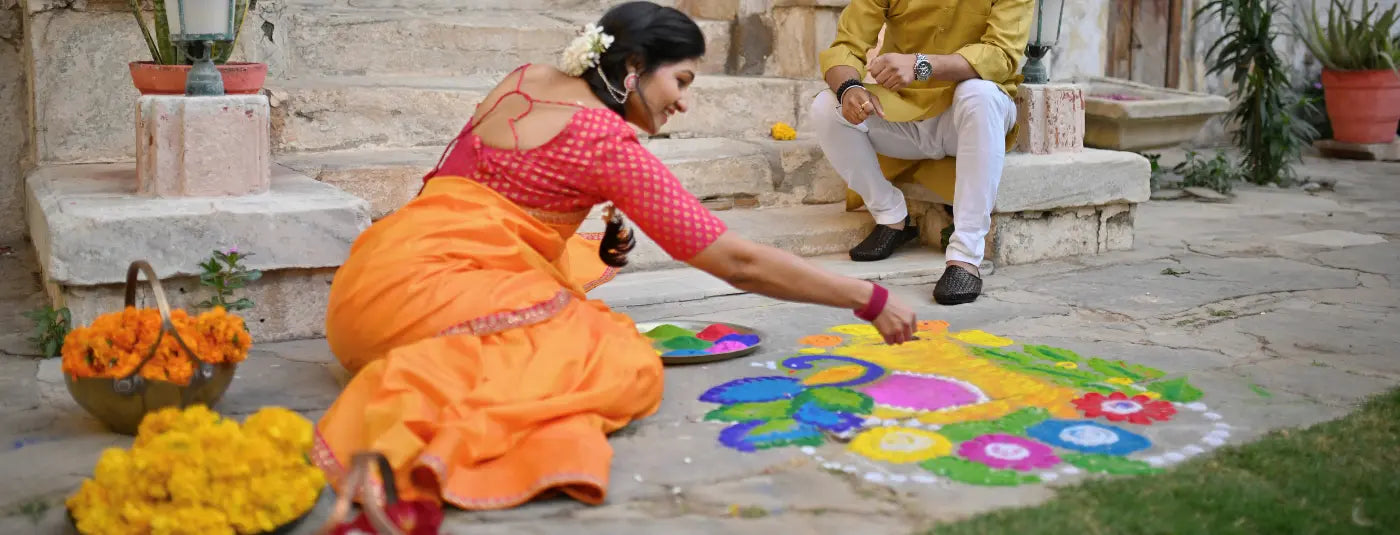
Rangoli 2025: How To Make Rangoli Art
As Diwali approaches, homes across India come alive with light, colour and joy. At the heart of these celebrations is the art of rangoli, a tradition that involves making intricate patterns in the entrances of homes as a way to invite the Goddess Lakshmi and other deities, while warding off negative energy and bringing joy to homes.
Making rangoli art can be a calming, mindful experience that many can enjoy outside of Diwali celebrations, whether as a creative hobby or a way to bring positive energy into a space. At Ministry of Colours, we’ve enjoyed making plenty of rangoli art over the years, so wanted to share our favourite tips, techniques and easy design ideas to help you create your own rangoli patterns in 2025.
What is the Meaning of Rangoli?
Rangoli is more than just a decoration, it’s a symbol of peace and a way to connect with the divine. The term rangoli derives from the Sanskrit rangavalli, with ranga meaning colour and valli meaning row or line, literally translating to a row of colours.
The origins of rangoli are explained throughout history and mythology. One popular legend traces its creation back to Lopmudra, the wife of a sage called Agastya who wanted to help her husband in worshipping the Gods, so she began to make rangoli art as a decoration for a place of worship. Lopamudra asked the Panchatatva (the five elements – sky, wind, earth, fire, water) to give her colours. She collected blue from sky, green from water, black from soil, red from fire and white from wind, which she then used to create the first rangoli pattern.

What is Rangoli Made Of?
How to Make Rangoli for Diwali
Creating your own rangoli designs at home is easier than it looks and can be a fun, family friendly activity that everyone can enjoy. It even makes for a great activity for schools and can be a creative way for teachers to educate students on the traditions of Diwali.
Rangoli art at home can either be made on a flat surface near the entrance of your home, as is traditional, or inside on a tabletop or even by glueing the design directly onto a piece of paper. Start by drawing a rangoli pattern either in pencil or chalk, then carefully fill in the patterns with coloured powders, rice or flower petals. If you’re new to rangoli art, work slowly, carefully following the design to keep the lines neat. To make this part of the process easier, we recommend using easy squeeze bottles filled with coloured sand or marble dust to allow for better control.
Once finished, add small diyas or tealights around or within your pattern to illuminate your rangoli and bring your design to life.

How to Draw Rangoli Patterns
Perhaps the most challenging part of creating rangoli art is getting started with a pattern. Some diwali rangoli designs can be quite complex and intricate, but you can begin with simple geometric shapes, floral patterns, a mandala or repeating patterns to achieve an easy rangoli design.
Mandalas are popular rangoli designs as they’re naturally symmetrical, typically in the form of circular, geometric patterns. They have roots in ancient Sanskrit, with mandala translating to circle, and are used in Hinduism, Buddhism and other spiritual traditions as a symbol of peace and balance. Beginners or children may especially benefit from using rangoli stencils rather than drawing freehand.

How to Make Rangoli Designs with Dots
A traditional method for creating rangoli art is to start by drawing out a grid of dots and using this as a guide for your design. Begin by deciding the design you want to draw, whether it be floral or geometric, then draw dots evenly spaced in a 7x7 grid. Next, join your dots to form different shapes such as triangles, squares and circles, ideally in a symmetrical design. This will form a basic layout of your rangoli.
Once the basic structure is in place, you can start getting creative with the design, overlapping shapes or adding smaller patterns within larger ones, while keeping the overall symmetry. Now, all that’s left is to fill in the design with colours of your choice!

At Ministry of Colours, we’ve got just the thing needed to create easy rangoli designs at home. We’ve worked hard to develop our own rangoli kit, complete with seven vibrant colours in easy squeeze bottles that are perfect for both beginners and experienced artists alike, making it simple to draw precise patterns. We also offer rangoli colour refill sets that are ideal for schools, youth clubs or anyone that needs extra sand for larger groups. With these kits, creating beautiful, colourful rangoli has never been easier. So this Diwali, bring your home or classroom to life, celebrate the festival of lights and enjoy the calming activity of making your very own rangoli art.
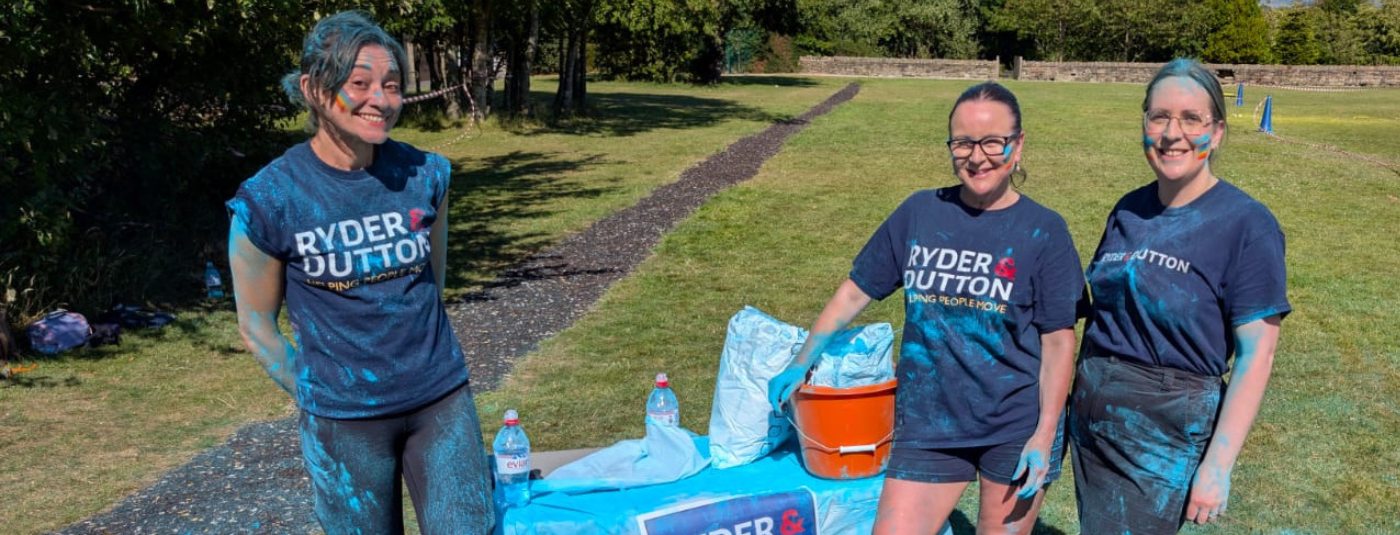
Building Community Through Colour: Ryder & Dutton Sponsor St John’s School Colour Run
When the St John’s School Colour Run burst into Golcar with laughter, bright powder, and families running side by side, Ryder & Dutton were proud to be one of the event’s sponsors. For the estate agency, it was more than just a marketing opportunity – it was about living out their values in the heart of the community.
“We’re always looking for ways to support the communities we work in,” Laura Watts (a spokesperson from Ryder & Dutton) explained. “When we heard about the St John’s School Colour Run, we felt it was a fun, inclusive event that was supporting two local schools in Golcar.”
Two Schools, One Goal
The event wasn’t just for one school – it brought together St John’s School and Golcar J&I. This collaboration gave the Colour Run a bigger impact than either school could have achieved alone. By joining forces, they were able to combine resources, recruit more volunteers and participants, and share the workload of planning and organising. The result? A smooth-running event that felt like a true celebration of community spirit.

Finding the Right Fit
The connection came through Claire McMahon of the St John’s Home and School Association, who reached out directly to Ryder & Dutton. “It immediately felt like a great fit for us,” they said. And it wasn’t their first time backing a school or community initiative either: “Supporting schools and local events is something we value highly.”
The company saw a natural alignment between their ethos and the Colour Run’s purpose. “Community, health, and family are all core values for both the Colour Run and Ryder & Dutton. We believe in promoting well-being and building connections locally – this event ticked all those boxes.”
A Day to Remember
Though their involvement was primarily as a sponsor, the Ryder & Dutton team stayed close to the organisers and made sure to show up on the day. “Three members of our team attended, and they absolutely loved the atmosphere. It was vibrant, full of energy, and heartwarming to see so many children and families enjoying themselves.”
Visibility was another benefit. “We had branded signage at the event, and our logo was on the t-shirts our staff members were wearing. It was great to have that visibility while supporting a positive cause.”
Sharing the Story
The team made sure to highlight their support beyond the event itself. “We shared posts on our social media channels and included it in internal communications. We always try to celebrate our community involvement where we can,” they said. Photos of the team in action added a personal touch to their online presence.
Community Impact
Feedback from the community has been uplifting. “Several local residents and clients commented that they appreciated seeing a local business supporting school initiatives – it’s helped reinforce our role in the community.”
While new business opportunities weren’t the motivation, the event naturally fostered connections. “We did make some great connections with local families and community leaders. These kinds of events naturally open the door to new conversations.”
The Organiser’s Perspective
For Claire McMahon, one of the organisers from the St John’s Home and School Association, the Colour Run was everything she hoped it would be. “Wow, what a day – it was amazing,” she said. “Everyone was excited and there was a real community feel.”
Working alongside another school made a big difference to the scale and success of the event. “Joining the two schools meant we could use both fields, share the workloads and help each other with organising the event.”
Fundraising was at the heart of the Colour Run, and Claire highlighted what worked best: “Selling small bags of colour powder and definitely getting sponsors to help cover the cost.” The money raised will go towards a new climbing frame and playground equipment – resources that will benefit children in the local community for years to come.
For anyone planning their first Colour Run, Claire had some advice: “Take your time. Seek advice from Ministry of Colours and have fun with it.”
Looking Ahead
For Ryder & Dutton, the true reward was simple: “Seeing the smiles on children’s faces, knowing we helped make that day possible. It’s rewarding to contribute to something that brings so much joy and positivity.”
Asked whether they’d do anything differently, the answer was straightforward: “No, it was a well organised event.” As for the future, they were enthusiastic: “Absolutely! We’d be more than happy to support similar events. It’s a great way to stay connected to the communities we serve.”
And their advice to other businesses considering sponsorship? “Get involved! It’s not just about visibility – it’s about building relationships and showing your commitment to the people around you. It’s one of the most rewarding things you can do as a local business.”
“Ministry of Colours were super helpful and just amazing people to deal with.” – Claire McMahon
A Colourful Path to Success for Your Sports Club
The vibrant and exciting atmosphere of a colour run can breathe new life into your sports club while raising essential funds. By hosting this enjoyable colour powder event, you not only encourage participation by bringing together your local community, but it also attracts new club members and future fans. Here’s how to do it effectively...
The Untapped Potential of Colour Runs
Colour runs are more than just a run; they're a celebration of health, community and fun. These events attract people of all ages, making them perfect for fundraising and promoting your sports club. Whether your sports team needs new members and sponsors, or funds for new kits and clubhouse improvements, a fun run can create a memorable experience encouraging friends and families to get involved.
Combining Fun and Fundraising for Sports Clubs
Planning a colour run allows you to combine fitness with entertainment. Participants pay a fee, and in return, they enjoy a unique experience. This can significantly boost your sports club's funds while promoting awareness of your activities. Everyone loves having fun while supporting a good cause! One great example of this was the The Blue Run hosted by Manchester City Football Club. The event helped to raise funds for Manchester City's charity programmes, which create healthy people, healthy futures and healthy communities for people across Greater Manchester.
Planning Your Colour Run: A Step-by-Step Guide
- Set Realistic Goals and Expectations: It's essential to set achievable goals for your colour run. Consider how much money you want to raise and what you hope to achieve, like attracting a certain number of new fans, or raising money for a tournament trip. Setting clear expectations will help you stay focused and measure success.
- Choose the Right Location and Date: Pick a location that’s easily accessible, like a local park. Use your own club's sports field if possible, to raise awareness of your club's premises. Ensure your chosen date doesn't clash with other community events for maximum participation.
- Budget for Your Colour Run Event: Create a detailed budget covering entries, supplies, permits, and marketing. A well-planned budget prevents any surprises and helps maximise your fundraising efforts. Get in touch with Ministry Of Colours to secure budget-friendly colour powder and accessories.
- Maximise Your Fundraising Efforts Through Sponsorships: Local businesses can help by sponsoring your event. Offer them visibility through banners and promotional materials. It’s mutually beneficial; they get exposure, and you receive financial support.
- Utilise Online Platforms for Promotion and Donations: Use social media and crowdfunding sites to tell the world about your event and raise money online. Regular updates and exciting visuals will help to generate a buzz. Use local community groups to spread the word even further.
- Post-Event Analysis and Future Planning: After the event, assess its success. Did you meet your fundraising goals? How many new members did you attract? Collect feedback from participants and volunteers. Insights can help to improve your future colour runs and ensure they are even more successful. Use the momentum from your event to plan future fundraising activities. Building a calendar of events can create ongoing engagement and support for your club.
Leveraging the Colour Run for Member Recruitment
Thought about transforming your open day into a colour run? Invite potential members to join in the fun and learn about your sports club's offerings. This creates a lively atmosphere and encourages sign-ups. Ensure everyone feels included and welcome. During the event, set up booths showcasing your club's activities. Demonstrating your facilities and programs can entice participants to join after enjoying the day.
Power Up Your Sports Club with Colour Powder
A colour run can be an effective fundraiser and recruitment tool. Proper planning, effective promotion, and a welcoming community will help maximise your success. Regularly hosting colour runs invites ongoing community involvement and can lead to increased membership and support for your sports club. So, what are you waiting for? Start organising your colour run now and watch your sports club flourish. Get in touch with Ministry Of Colours if you need a hand getting started.
7 Fun Obstacle Ideas for a Colour Run
We love a colour run event here at Ministry of Colours as they’re the perfect way to bring people together for a fun and memorable event, while raising money for a good cause. If you don’t know what a colour fun run is, it’s an exciting fundraising event that attracts people of all fitness levels to come together and run a course to raise money for charities, schools or a local club.
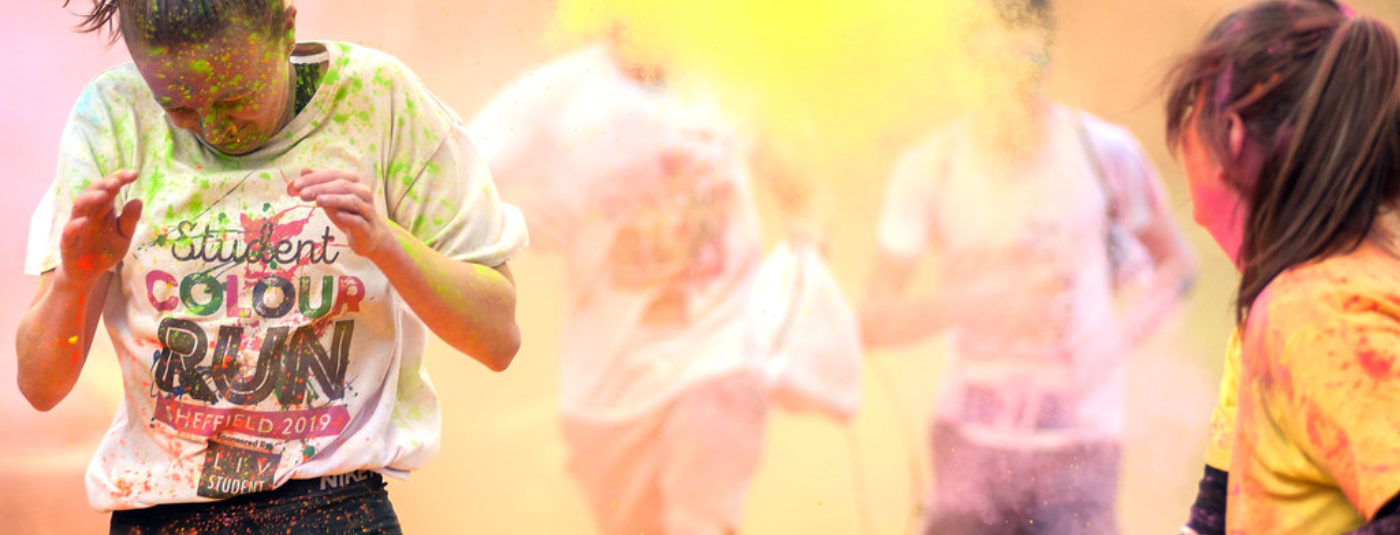
Typically colour runs are held in large outdoor spaces such as parks and playing fields, and as runners make their way around, they’re showered in bright, vibrant colour powder – hence the name colour run! Colour fun runs have grown in popularity and have become popular amongst schools and charities to help raise money for various causes.
If you’re looking to host a colour run but want to take it to the next level, consider adding an obstacle course to the mix. This can increase the fun and make your event stand out from the crowd, attracting more participants and increasing donations. We’ve put together some colour powder themed obstacle course ideas to introduce to your next fun run event.
How To Set Up An Obstacle Course
First things first, you need to think about what obstacles to include, how many to have and where they’ll be on the course. You want to consider adding obstacles that are suitable for all ages and abilities so everyone has a chance to join in. Offer participants a chance to skip certain obstacles if they want to, perhaps letting them join in on throwing the colour powder at these stations so they’re still part of the fun.
Make sure to space out the obstacles evenly throughout the course so it’s not overwhelming for participants, striking the perfect balance between fun, but not too exhausting. Use signage throughout the course to keep runners on track and ensure they’re completing each obstacle in order. To ensure the rest of your event is a success, follow our handy guide about how to organise a colour run event.
Tunnel Crawl
Place a long tunnel (preferably a rainbow one if possible!) on the ground, encouraging participants to crawl through it. When they reach the other end, have volunteers waiting to shower them in bright clouds of colour powder as they emerge before setting off on the rest of their run.

Balloon Maze
Fill up a bunch of balloons with a variety of different coloured powders. You can choose to fill up the balloons with helium and tie them to the ground, or put up some form of structure and hang them from the ceiling. Either way, create a winding maze, with the balloons placed closely together, that participants will have to navigate through. As they run through the maze, they’ll have to squeeze and brush past the balloons and if they pop one, they’ll be covered in a burst of vibrant powder!
Balancing Beam
A balancing beam is a classic obstacle that will test participants balance and coordination, all while adding a fun challenge to your run! Place an elevated balancing beam (or a long, narrow bit of wood) at a point in your course. As participants make their way across the beam, have the volunteers throw handfuls of powder at them from the side while they try to keep their balance.

Hula Hoops
Using hula hoops or old tyres, place these on the ground in a zig-zag pattern or at varying distances, requiring participants to jump between them. As runners make their way across the obstacle, have volunteers on hand to shower them with powder to add an element of fun to the challenge.
Colour Wall
Build a large wall or climbing frame that participants must climb over while volunteers throw powder at them. On the other side of the wall, participants could slide down or jump into a small pit of soft, cushiony material (such as foam) that’s been generously covered in coloured powder. Then, as they crawl their way out of the pit they’ll get covered in powder and emerge in a variety of bright colours.
Powder Crawl
For this next obstacle idea, grab a large piece of tarpaulin, or a similar sheet, and lay on the ground. Cover it in various coloured powders to create a bright path. As participants reach this obstacle, they’ll need to get down on their hands and knees or belly-crawl across this colourful challenge. The powder will make the crawl slightly slippy and provide some laughs as participants make their way across, while also ensuring they’ll be covered head to toe in a rainbow of colours!

Colour Clouds
A colour cloud is the perfect way to finish off your colour run with a big burst of vibrancy and excitement! As participants cross the finish line, have volunteers shower them in clouds of colour using powder fountains or colour cannons. This will create a picture perfect moment and provide a memory that the runners will remember. Don’t forget to have a colour run medal or wristband waiting for each person as a token of their achievement and something to remember the event by!
At Ministry of Colours, we’ve been proudly supplying charities, schools and community groups with our high-quality colour powder for colour runs and events for many years. Our non-toxic powder is ideal for providing bright bursts of colour and making events memorable. All our products are safe for the skin and the environment, washing away easily with water and without staining.
If you’re planning your next colour run event, then order your colour powder and accessories directly from the experts. If you need a helping hand working out how much powder you need for your event, use our handy calculator or speak to a member of our team.
How To Organise A Santa Fun Run
The Christmas season is almost upon us! We’re very excited for the festive fun to well and truly kick in here at Ministry of Colours and we’ve been enjoying seeing all of your Christmas fundraising orders coming in. This is the perfect time of year to bring people together to raise funds for charities and local causes and what better way to do so than with a Santa Fun Run!
A Santa Run is a great way to get everyone of all ages involved in a fun, festive and rewarding experience while raising money for amazing causes. They’re perfect to host in schools, local community groups or even workplaces. Wondering how to go about organising a Santa Run? Our handy guide has you covered!
What Is A Santa Run?
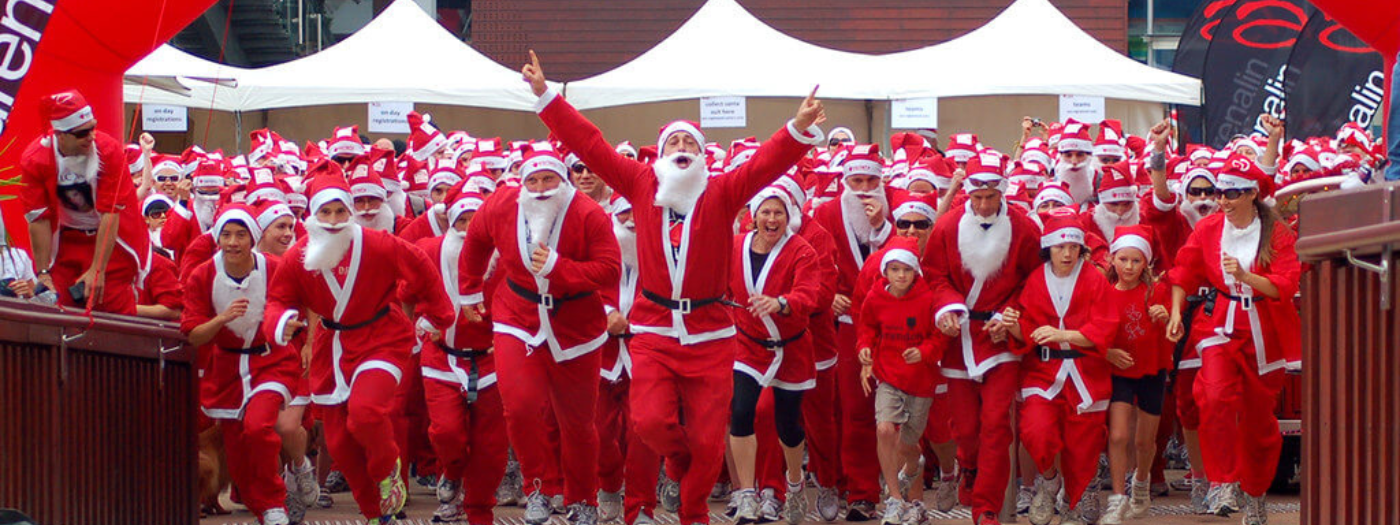
Before we jump into anything, let’s first cover what a Santa Run actually is. Held during the Christmas period, a Santa Run involves participants dressing up in Santa suits or other holiday-themed characters (think elves and reindeers!) and taking part in a fun run. Some Santa Runs are organised just for fun, but most are organised as charity events, with participants encouraged to fundraise money for important causes.
Even if it’s a 5K, 10K or a half marathon, the focus is more on having fun and getting dressed up, rather than the fitness element. People of all fitness levels are encouraged to take part in Santa Runs, making them the perfect family-friendly event. The joy is all in seeing hundreds of Santa Clauses running together!

Choose A Date And Location
When it comes to organising a Santa Run, it’s not much different to organising a colour run. You’ll want to start with choosing a date for your fun run. A weekend in December is usually best for this in order to include as many people as possible and capture the peak festive excitement.
Next, decide on a location. It needs to be a space big enough to accommodate for large groups of runners and spectators, such as a park or a local town centre (with council permission). If you’re organising a Santa Fun Run for a school, the school grounds or a local playing field will work just as well.
Decide A Route
Once you’ve decided on a location, you need to decide on the length of the run and the route it will follow. Most Santa Fun Runs are no longer than a standard 5K, usually a short loop round a park or town centre that caters to most fitness levels. Consider adding some festive signage around your course to direct runners on their way or inform them of their progress around the course.

Spread The Word
Next is one of the most important steps, spreading the word and encouraging people to sign up! You want to ensure that your event has a good turnout to make it as fun as possible and raise as much money as you can. Promote your event across social media, targeting local community groups to get the word out. Create posters to display in local businesses and make sure to reach out to your local newspaper to see if they can help promote your event.
Decide On A Fundraising Strategy
How are you going to use your event to raise money for your chosen charity? There are different ways to fundraise when it comes to fun runs. For example, you could charge runners an entry fee to sign up to the event which also includes their Santa suit and other festive accessories. The most efficient way to raise funds however is by providing participants with a sponsor form to collect donations or encouraging them to set up their own fundraising page that’s linked to your event.
On the day of your event, you can place volunteers around the course with donation buckets, organise a raffle and sell food and drink to raise extra funds.

Recruit Volunteers
To make sure your event runs smoothly, you’re going to need volunteers to help out on the day. Gather up a team of volunteers to help set up the event during the morning, then assign them to stations throughout the course. You’ll need a team to take care of checking runners in when they arrive and volunteers placed at checkpoints to hand out water and monitor the event.
For a fun take on Santa’s little helpers, have all of your volunteers dress as elves, getting them involved in the festive cheer and helping them stand out to participants!
Secure Your Outfits
It wouldn’t be a Santa Run without one crucial thing – Santa costumes! You can either provide participants with Santa hats, full Santa suits or encourage them to buy their own festive outfit. Of course, not everyone has to come as Santa and some participants may choose to wear a pair of reindeer antlers or a festive head bopper instead!

Have Fun!
And last but not least, have fun! That’s what these events are all about and the key to a successful Santa Run is ensuring that everyone enjoys themselves. Keep spirits high as participants run around the course with some festive music and as they cross the finish line, treat them to a hot chocolate (or a mulled wine for the adults!).
If you want to add an extra element of fun to your Santa Run, then consider introducing colour powder for a Festive Colour Run. Throw a combination of green and red colour powder at participants as they travel around the course, covering them in a vibrant cloud of Christmassy colours! Not only will this add to the excitement of the event but make for some fantastic photo opportunities too.
At Ministry of Colours, we’ve got all of the items you could possibly need to organise a successful and cheerful Christmas fundraising event. From festive accessories to holiday themed pin badges to cute Christmas character flumpets, there’s plenty of fundraising fun to be had. And of course, we can help out with all of your colour powder needs for any Christmas events or if you’re looking to plan ahead, any 2025 events! Contact a member of our team to discuss your fundraising requirements and explore the products we offer.
How Colour Powder Events Brighten Up Corporate Social Responsibility (CSR) Efforts
Fundraising events are more than just a group of people getting together; they’re exciting opportunities to make a difference to things that matter to you, and have lots of fun, both at the same time.
One of the most vibrant ways to fundraise is by having colour powder themed events. These events bring people together to enjoy colourful fun whilst raising money for good causes. So, what exactly are colour powder events, and how do they fit with a business’s CSR programme? Let’s have a look:
What is CSR and why is it important?
CSR is an abbreviation for Corporate Social Responsibility, a business model that aims to provide positive social impact on issues such as climate change, poverty, equality, diversity and inclusion. Through CSR programmes and charitable efforts, a business's brand and reputation are often elevated to new heights. One of the best examples of CSR is from Ben & Jerry's, who donate 7.5% of their pretax profits to charity. The UN Global Compact and the Global Reporting Initiative are the main international standards for CSR.
What Are Colour Powder Events?
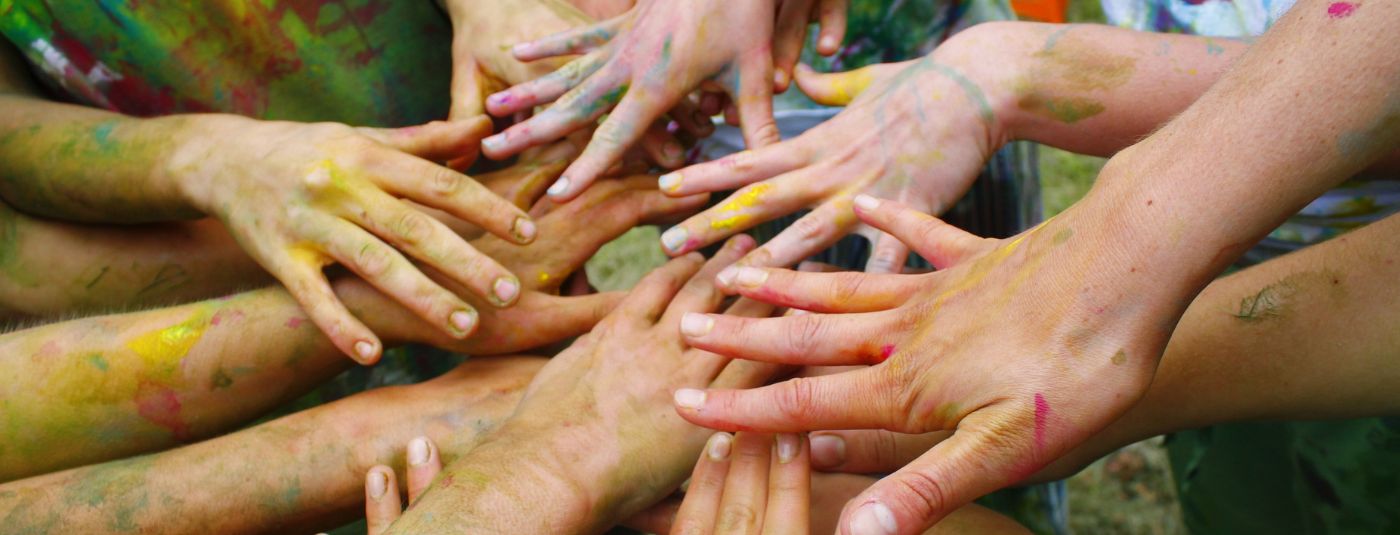
These are events where participants run, walk, or just simply enjoy being active but at the same time lots of colourful powders are thrown at everyone, often by everyone! Think of it like a joyful rainbow explosion, that turns a simple activity into a thrilling experience. Participants often wear white T-shirts, which act as a canvas for the colours so that each splash of powder represents not just fun but also the spirit of giving.
Why Are These Events Popular?
Well firstly, they are visually exciting. You can't help but smile when you see a group of people covered in bright colours. It's a feast for the eyes and creates unforgettable memories. Secondly, these events encourage community involvement. Families, friends, sponsors, and colleagues uniting for a common purpose – to support a cause. raising funds for local charities, schools, or health awareness, everyone can play a part.
The Link Between Colour Events and CSR
CSR embodies the idea that companies can act ethically and contribute positively to society by including social and environmental concerns in their business operations. That’s where colour powder events come into play.
Businesses can sponsor or organise these events to promote their brand and at the same time, give back to their community. By investing in colourful fun, companies are able to engage their staff and customers alike. It can boost morale and team spirit, demonstrating that a business cares about more than just profits.
This involvement shines a light on a company’s values and commitment to social responsibility. Colour events also provide fantastic marketing content for a business to use in their social media advertising and online promotions – a massive help to any marketing team as it helps to boost the appeal of the business, the supported charity as well as their colour powder events.
What Can Businesses Do?
Companies looking to enhance their CSR initiatives can easily get involved in colour powder events. Here are a few ways they can make an impact:
- Sponsorship and Financial Support: Businesses can provide funding to charities to help organise an event. This not only spreads the word about a good cause but also draws attention to the company’s role in giving back.
- Employee Engagement: Encouraging staff to participate fosters a sense of community and teamwork. It breaks up the monotony of the work environment and gets everyone excited about contributing to a cause.
- Promotional Activities: Companies can use these events to promote their products or services by setting up booths or offering freebies, all whilst staying aligned with the event's goals. They can also continue to profit from the event far beyond its conclusion as the promotional content gathered from such an event can act as a fantastic marketing resource.
The Benefits of Participating
So, why should you get involved in a charity's colour powder event? First and foremost, it's a fantastic way to give back to the community. You'll also meet new people, learn about different causes, and enjoy a day filled with laughter and energy.
The experience can create lasting memories with stories worth sharing. Who wouldn’t want to tell their friends about the time they ran through a cloud of colour, and all for a great cause? Both businesses and individuals gain so much from these events. So, whether you're running alongside friends or supporting a cause at work, remember: every colourful splash counts in making the world a brighter place. Join the movement, and let’s paint a better tomorrow together!
If you want to support a colour run event local to you but are unsure where to start, get in touch with Ministry of Colours so we can point you in the right direction.
Diwali Ideas For Schools and Students
Diwali, also known as the Festival of Lights, is just around the corner! During Diwali celebrations, millions of Hindus, Sikhs and Jains across the world mark new beginnings and come together with friends and family.
Here are some fun and educational Diwali activities and ideas for lessons plans to help students celebrate the festival, while understanding its history and traditions.
Teach The History of Diwali
Before any crafts or activities begin, the best way to introduce students to Diwali is to teach them the history behind the festival and its cultural significance. There are many stories regarding the origins of Diwali, however the most common is the story of Lord Rama. Following his return to Ayodhya after defeating the demon king Ravana, people lit diyas to celebrate his homecoming. This marks the triumph of light over darkness and good over evil, one of the central themes of the festival.
Lesson plans can include encouraging students to research how Diwali celebrations differ across different regions and cultures around the world. For instance, in North India people light diyas around their home, similar to the story of Lord Rama. In West India however people seek the blessings of Lakshimi, the goddess of wealth by creating intricate rangoli designs on their doorsteps and leaving offerings.

Create Your Own Rangoli Patterns
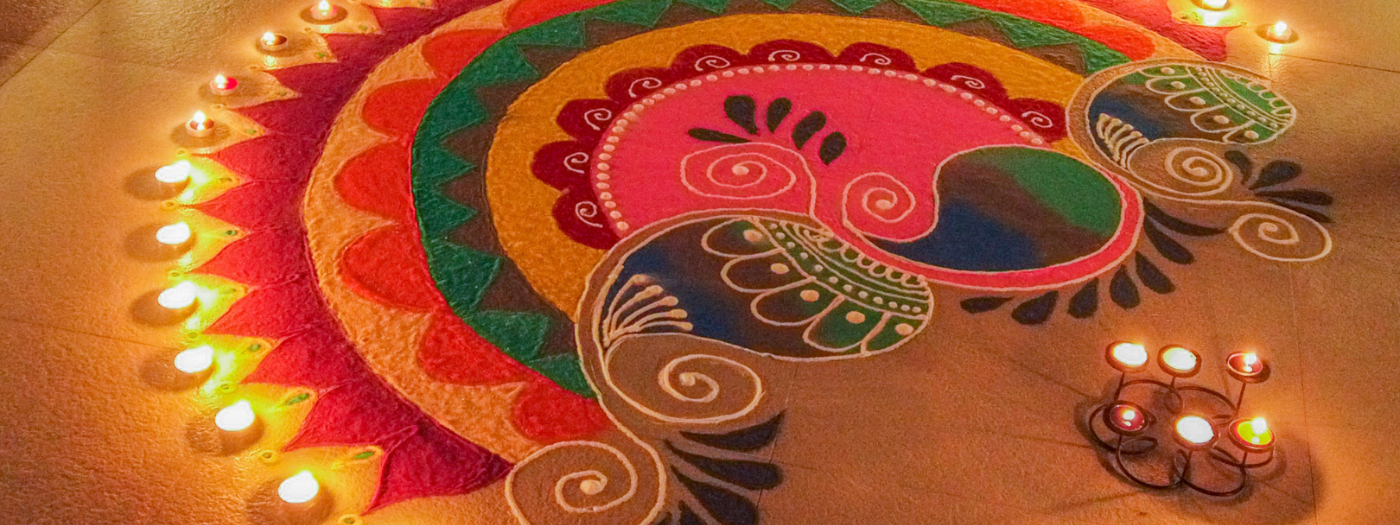
For students to further learn about the festival’s traditions and partake in a fun Diwali activity, they can try their hand at designing their own rangoli patterns. Rangoli is a traditional Indian art form where bright, bold and stunning patterns are created on the ground using coloured sand, rice or flowers.
Creating rangoli art in schools is a great way to foster creativity and get students creating fun and bright art that can be used in the classroom. To make this activity traditional, use rangoli art kits that include coloured sand or marble dust. Using easy-squeeze bottles, students can draw mandala patterns directly on tables, the floor or paper to better understand this Diwali activity and the significance behind it.
For those who don’t want to risk using coloured sand or marble dust indoors, rangoli art can also be created using tissue paper, stickers or simply colouring in downloadable rangoli patterns!

Make Diwali Paper Lanterns
As we mentioned before, Diwali is also known as the festival of lights and therefore lights, lamps and lanterns are heavily associated with the celebrations. Another great traditional Diwali activity for students to explore and further their learning is making paper lanterns. During Diwali, lanterns, also known as kandeels, are often hung outside of homes and throughout the streets as part of the festival.
In the classroom, provide students with a sheet of plain or coloured paper. Ask them to cut off one end of the paper and set aside to be used later as a handle. Then using coloured pens or paint let them decorate their sheet however they want before folding and cutting patterns into the paper. Once finished, students can stick their sheet together to form a cylinder and attach the handle to have their very own Diwali lantern!

Bake Diwali Recipes
Food plays a big role in Diwali traditions, with families and friends coming together to share feasts and treats during the festival. If your school has a kitchen, students can have fun learning how to make traditional Diwali snacks and sweets such as ladoos, burfi and samosas!

Here at Ministry of Colours, we’ve been getting in the Diwali spirit with our own rangoli collection! We’ve been getting creative in the office designing our own Diwali patterns and enjoying the mindful experience rangoli brings. Our rangoli art colour kit is perfect for easily creating fun and vibrant patterns, making it ideal Diwali activity for students. Each kit comes with 7 vibrant colours made from authentic marble dust in easy-squeeze bottles so unique designs can be made with ease.
If you’re looking to for ideal Diwali activities for children and are in need of craft ideas, then look no further than our rangoli art kits. We also offer refill kits so you don’t have to worry about your class running out! To find out more about our rangoli kits and use them in your classroom, then please don’t hesitate to reach out to a member of our team.
How Is Colour Powder Used In Special Effects?
You may have noticed, but here at Ministry of Colours we’re pretty enthusiastic about colour powder and one of the things we love most about it is how versatile it can be. From fundraising events to festivals to gender reveals, the possibilities are endless. But the versatility of colour powder doesn’t end there!
Beyond events, colour powder is perfect for photography and videography shoots, adding a fun and visual element to shots. As all of our colour powder products are non-toxic and made using natural ingredients, they’re perfectly safe to use in special effects make-up and set design too.
Whether you’re aiming to capture vibrant photographs or create stunning visuals in your scenes, colour powder is a safe and ideal way to transform projects into striking masterpieces. Let’s dive into the world of coloured FX powder and discover exactly how it can be used to enhance creative projects.
Using Colour Powder For Backgrounds & Visual Effects
If you’re looking to take a photography shoot to the next level, then using colour throwing powder to create visual backgrounds is the way to go. Whether you’re capturing portraits, group shots or doing some pet photography, incorporating vibrant bursts of colour can add a dynamic element to your images.

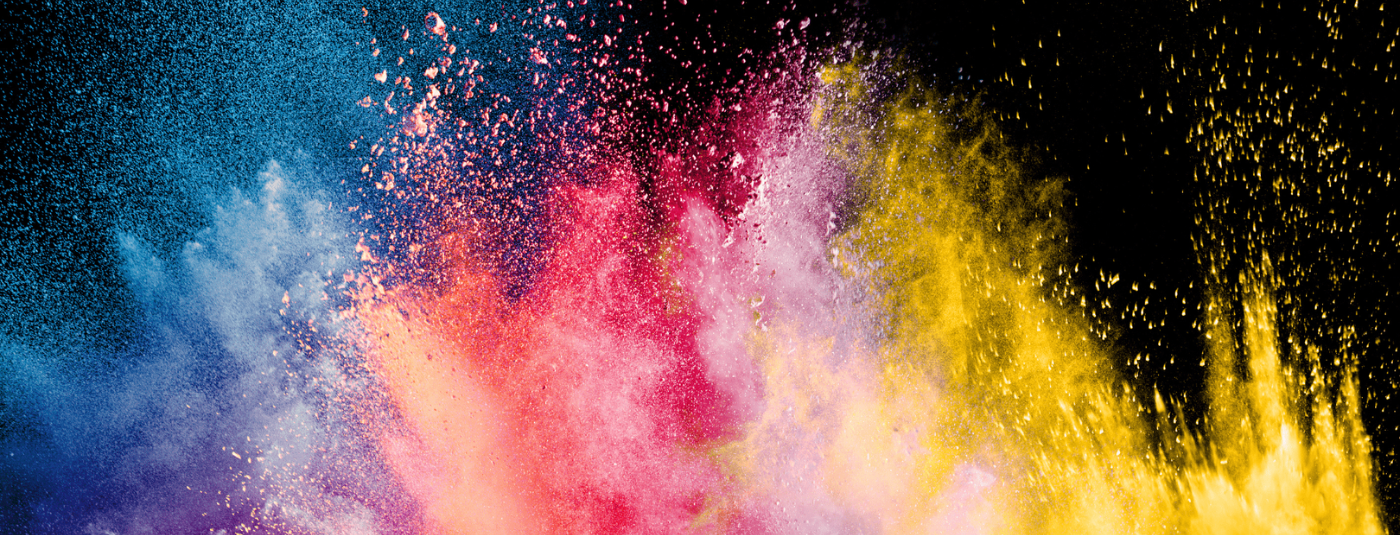
Or better yet, colour powder is great to use for videography projects due to the visual nature of the product. You can see the colour powder being thrown or exploding in real time to create striking bursts of colour across the screen. Using colour powder for video projects has become quite popular amongst music artists and has featured in a number of music videos in recent years.
A great example of this is Madeon’s music video for The City, which shows a group of people throwing colour bombs at each other across a city in slow-mo, creating amazing visuals and a rainbow of colours. Paramore’s Now music video is another great example of how colour powder can be used to create visual effects on video, with the different coloured powders being used to simulate blood in a battle.
On film shoots, colour powder can be used in pyrotechnics to create vibrant and dynamic visual effects across explosions in action scenes or celebration sequences to create striking moments on screen. Most colour powders are easy to clean by simply vacuuming everything up, wiping everything down or washing it all away with water, so there’s no need to worry about damaging a set.

Using Colour Powder In Set Design
By using colour powder in set design, filmmakers can add a bold and creative element to their scenes. For example, white colour powder can be used to replicate a snowy landscape, creating a textured and wintry scene with ease. Bright, colourful powders can also be used to create explosions or magical effects to make scenes more visually appealing.
Using Colour Powder For Make-Up & Clothing
Colour powder can also be used in photography and videography to create special effects make-up, or enhance clothing pieces to add dramatic effects to them. Red colour powder can be used to replicate blood for example whilst bright blues, greens and purples can be used to create fantasy style looks for sci-fi films.

It’s important to ensure that the type of colour powder being used is safe for skin and fabrics to avoid causing irritation or damage. Always check the ingredients to make sure the powder is non-toxic and made using natural materials.
The good news is that here at Ministry of Colours, all of our colour powder products are indeed non-toxic and made from natural ingredients! Our colour powder range comes in a variety of different colours to suit whatever creative project you may need them for. We have 10 different high-quality colours available, from bright yellows, pinks and blues to neutral shades of white and black. And for creating colour explosions, make sure to check out our colour powder fire-extinguisher fountains. They’re perfect for creating big and bright clouds of colour!
If you have a videography project coming up and are looking to create special effects using colour powder, then look no further than Ministry of Colours. Get in touch with a member of our team to find out more about our products and how we can help bring your project to life.
What Is Diwali? The Ultimate Guide
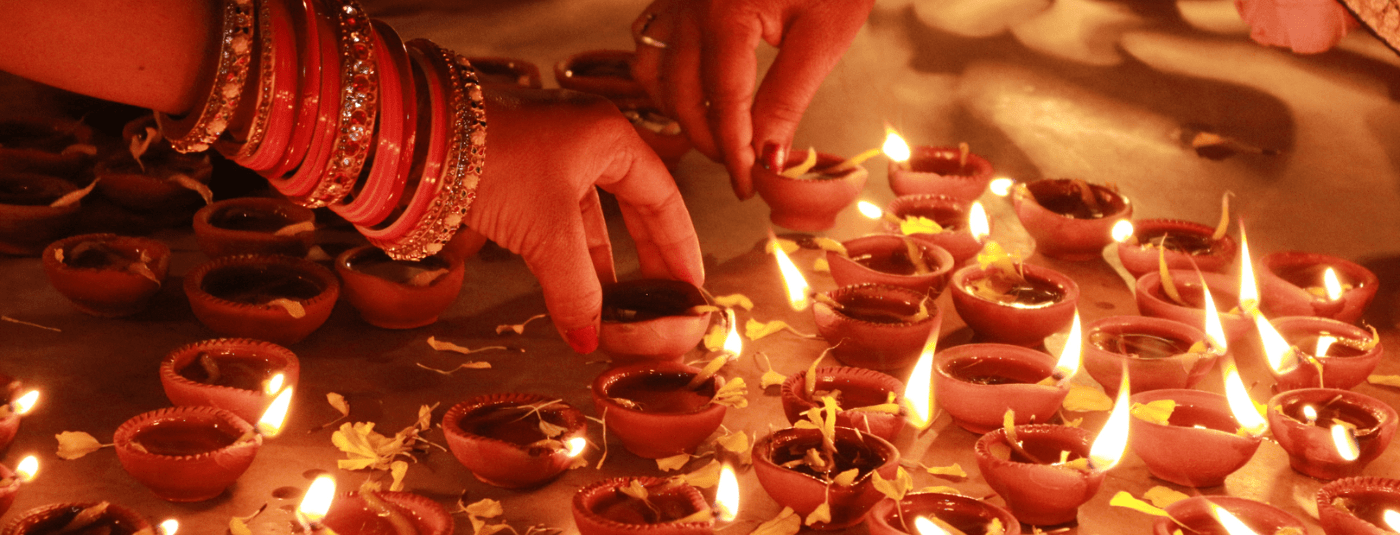
Diwali, also known as Deepvali, is the Hindu festival of lights. Celebrated by Hindus, Sikhs and Jains, Diwali marks a major moment in the calendar, with festival celebrations lasting five days. It’s a festival of new beginnings and celebrating the triumph of good over evil and light over darkness, often coinciding with harvest celebrations.
But how is the festival celebrated and what is diwali about? Well, we’ve got all the answers you need right here! Our ultimate guide to Diwali covers everything you need to know, from diwali traditions, the history of diwali and how you can get involved in the celebrations yourself.
What Is The Meaning of Diwali?
The name Diwali derives from the Sanskrit word dipavali, which means ‘row of lights’. There are many interpretations of the history and background of Diwali, with the most common being the story of Lord Rama. In Hindu mythology, Diwali marks the day that Lord Rama, his wife Sita Devi and his brother Lakshmana returned home following 14 years of exile. After Rama defeated the demon king Ravana, the villagers celebrated his return by lighting diyas to welcome him home.
Diwali then became known as a celebration of light, new beginnings and making a fresh start. Many consider it the start of their new year and begin making plans for a new start, in the same way that people make new year’s resolutions.
Why Is Diwali Celebrated?
Not only do Diwali celebrations mark the return of Lord Rama and new beginnings, but the festival also honours Lakshmi, the goddess of wealth. For many, Diwali festival is a tribute to Lakshmi.
During Diwali, lamps are lit and windows and doors are left open to help Lakshmi find her way into people’s homes. Many Hindus believe that by worshipping Lakshmi, they will be blessed with fortune and success.

How Is Diwali Celebrated?
As mentioned, Diwali is a five day festival with different celebrations, events and activities happening on each day.
Day One – Dhanteras
The first day, known as the Day of Fortune, is all about good luck, wealth and valuables. On this day, people thoroughly clean their family homes and create colourful and intricate Rangoli patterns on their doorstep using flowers, rocks or coloured sand.

Day Two – Naraka Chaturdashi
Day two, also known as Choti Diwali, focuses on the triumph of good over evil. During the evening, houses are lit with oil lamps and in some areas, effigies of evil are made and burnt.
Day Three – Diwali
Day three, the most important day of the festival! Also known as Lakshmi Puja, on this day people celebrate Diwali by lighting diyas (oil lamps) and enjoy huge firework displays. It is on this day that people leave their doors and windows open for the goddess Lakshmi to enter their homes.

Day Four – Govardhan Pujan or Bali Pratipada
The fourth day of the festival involves visiting friends and family as well as symbolising the love between husband and wife. The day generally consists of families dressing up in new clothes and jewellery and visiting each other to bring gifts and sweets.
Day Five – Bhai Dooj
The fifth and final day of Diwali celebrations focuses on the bond between siblings. It’s tradition on this day for brothers to visit their sisters’ homes with gifts. In return, the sisters often prepare a feast and pray for the protection and wellbeing of their brothers’.

When Is Diwali Celebrated?
According to the Hindu calendar, Diwali always falls on Amavasya, the 15th day of the month of Kartik. Usually, this is between late October and early November.
Can I Celebrate Diwali?
Yes, anyone can celebrate Diwali! There are many ways to get involved with diwali celebrations and mark the occasion. This could involve setting up a fireworks display in your garden at home, exchanging gifts with your family and friends or decorating your house with lights and candles.
Or, if you fancy getting creative, you can create your own Rangoli patterns using vibrant colours and intricate designs. The best way to do this? With our at home Rangoli kits of course! We’ve developed these kits to let everybody try out Rangoli and enjoy creating their own fun and colourful patterns. Our kits consist of seven vibrant bottles of coloured sand and are ideal to create Rangoli patterns at home, in schools or even outside on the pavement as they are traditionally done.

We’ve designed our kits with ease in mind as all colours come in easy to use squeezy bottles to give you complete control over your design. There’s no need to worry about running out either as we’ve got plenty of refills available to ensure you can create as many designs as possible! And if you want to take your Rangoli art to the next level, why not consider our scented Rangoli Ylang Ylang marble dust? Ylang ylang is an essential oil known for alleviating anxiety and helping to calm the mind, making it the perfect addition to your Rangoli activities.
Celebrate Diwali and get started with your Rangoli art with Ministry of Colours. Whether you’re a seasoned artist or a beginner, we provide all of the tools you need to create stunning Rangoli masterpieces. If you have any questions about our Rangoli kits and would like to know more about them, please get in touch with a member of our team. We’d love to help you unleash your creativity!